
Neuromodulation has, for several years now, been part of a new generation of therapies with the potential to significantly transform the management of many neurological, chronic, and psychiatric disorders. It involves modulating the electrical activity of the nervous system through targeted stimulation applied in a non-invasive manner. One of the most promising developments in this field today is based on the use of ultrasound. Thanks to advanced acoustic focusing technology, ultrasound neuromodulation makes it possible to stimulate or inhibit neuronal activity with high precision—without the need for surgery or permanent implants.
In this article, we explore this approach in depth, covering its mechanisms of action, current clinical applications, and the benefits it offers to both patients and healthcare professionals. We also present the solutions we develop to support you in adopting this method. Our goal is to make this technology more accessible by providing reliable, flexible tools tailored to your therapeutic protocols and research needs.
What is ultrasound neuromodulation?
Neuromodulation refers to a range of techniques aimed at modifying the function of neural circuits using external signals. It can be applied to the central nervous system—particularly the brain—as well as to the peripheral nervous system. In all cases, the goal is to influence the transmission of nerve impulses, not by blocking neuronal activity, but by regulating neuronal excitability.
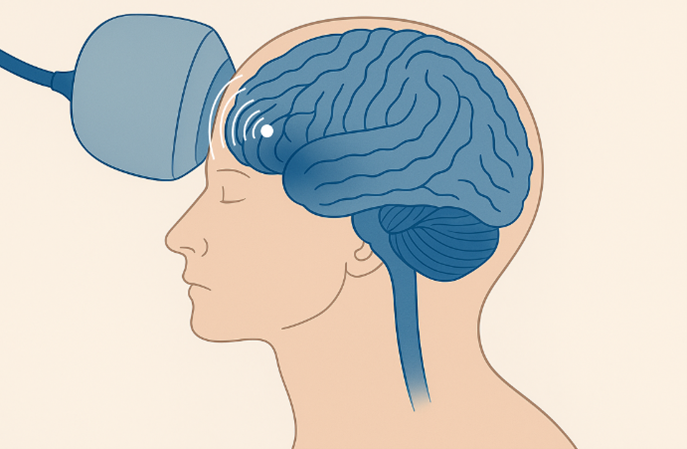
Long limited to implanted electrical approaches, neuromodulation has recently benefited from significant advances thanks to acoustic technologies. Ultrasound, in particular, makes it possible to act remotely, at depth, and without destructive effects. By modulating neuronal activity through subtle mechanical vibrations, it becomes possible to achieve effects similar to those of electrical stimulation—without altering neural tissue.
This method is especially relevant for conditions where pharmacological approaches have reached their limits, whether due to side effects, limited efficacy, or poor patient tolerance. Ultrasound neuromodulation therefore fits within a complementary therapeutic framework, addressing real and often unmet clinical needs.
How Ultrasound Neuromodulation Works
Unlike invasive neuromodulation techniques, which require the implantation of electrodes in the brain or along peripheral nerves, ultrasound neuromodulation relies on the emission of acoustic waves from outside the skull. These waves are precisely focused on a targeted region of the brain—without opening the skull, without general anesthesia, and without direct contact with neural tissue.
The ultrasound used is of low intensity and acts through purely mechanical effects. When these waves reach neuronal cell membranes, they induce very slight deformations that alter the electrical behavior of the cells. This mechanical stimulation modifies neuronal excitability, which can result in either activation or inhibition of activity in the targeted area.
By adjusting parameters such as intensity, frequency, pulse duration, and repetition rate, the stimulation can be tailored to each clinical need. Target areas are identified using medical imaging techniques, particularly functional MRI or transcranial ultrasound, enabling precise localization of the brain structures involved in the patient’s symptoms.
One of the key features of this technique is the absence of thermal effects. Unlike high-intensity ultrasound applications used for thermoablation or tissue destruction, it does not significantly increase tissue temperature. As a result, the risk of damage is very low, allowing for repeated or prolonged treatments with a high level of patient tolerance.
Challenges in the Development of Neuromodulation Equipment
In this context, ultrasound neuromodulation cannot be approached as the application of a standardized signal.
On the contrary, the strong dependence of outcomes on stimulation parameters places high demands on the control, precision, and reproducibility of the ultrasound systems used.
In research settings, as well as during the early stages of clinical development, the ability to:
- finely adjust stimulation parameters,
- reliably reproduce experimental protocols,
- monitor ultrasound energy delivery in real time,
becomes a key factor in analyzing observed effects, comparing studies, and advancing toward a more robust understanding of the underlying mechanisms.
These technical challenges are directly linked to the very properties that make LIFU so valuable—precise spatial focusing, access to deep structures, and reversibility of effects. However, they also require technological solutions capable of ensuring rigorous control over stimulation conditions.
In this context, research teams are increasingly turning toward modular and configurable ultrasound platforms, designed to adapt to a wide range of experimental protocols and use cases, rather than relying on fixed configurations.
These needs for flexibility, control, and reproducibility have become central criteria in the selection of technological solutions dedicated to ultrasound neuromodulation.
Modular Solutions Offered by SinapTec
Aware of the technical and clinical requirements associated with ultrasound neuromodulation, we have developed modular platforms capable of supporting a wide range of protocols. Our systems are built on a multi-channel architecture, enabling precise and dynamic focusing of ultrasound energy while ensuring rigorous control over each parameter.
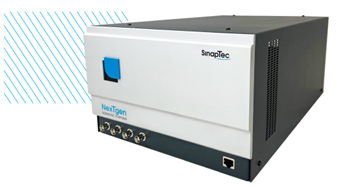
We have developed generators capable of delivering acoustic pulses tailored to the specific requirements of ultrasound neuromodulation. Intensity, frequency, pulse duration, and repetition rate—all parameters are accessible through an intuitive interface, designed to enable fine adjustments based on the targeted area and therapeutic objective. This flexibility allows for the treatment of a wide range of neurological conditions, with continuous adaptation to patient needs.
Real-time monitoring is a central component of our solutions. Through the integration of measurement and imaging systems, it is possible to track ultrasound propagation, verify accurate beam positioning, and ensure consistent and safe treatment delivery. This real-time feedback provides additional confidence for clinicians and enhances the overall reliability of the approach.
Our systems are compatible with commonly used medical imaging technologies, facilitating their integration into existing clinical environments. Whether you are working in a hospital department, a specialized clinic, or a research center, our equipment can be configured to meet your technical, logistical, and regulatory requirements.
Ultrasound Neuromodulation: Custom Solutions and Co-Engineering
For certain projects, specific constraints may require adaptations beyond standard configurations.
In such cases, SinapTec offers custom solutions developed through a co-engineering approach, in close collaboration with user teams.
Customization can involve the multi-channel architecture, transducer selection, control function configuration, or integration with existing systems.
This approach ensures precise alignment with project requirements, while maintaining system control, stability, and scalability.
Do you have a specific project, a technical question, or need a quote? Our experts are here to support you.
Medical Applications of Ultrasound Neuromodulation
One of the major strengths of ultrasound neuromodulation lies in the diversity of its applications. It enables intervention in complex conditions—sometimes resistant to other forms of treatment—while preserving brain structures and adapting to the specific needs of each patient. Several medical fields are concerned by this technology.
🔹 Chronic Pain
In the field of chronic pain, this approach represents a valuable alternative to heavy pharmacological treatments. It allows modulation of the neural circuits involved in pain perception, whether in neuropathic pain, lower back pain, post-operative pain, or pain associated with chronic conditions. Patients can benefit from long-lasting relief without the side effects associated with medication.
🔹 Parkinson’s Disease
In neurodegenerative disorders, particularly Parkinson’s disease, neuromodulation offers a non-invasive solution to reduce tremors, improve motor coordination, and decrease rigidity. It enables targeted intervention in brain regions involved in motor control, without the need for deep brain stimulation surgery, which can be complex and invasive.
🔹 Cognitive and Neurological Disorders
Cognitive disorders and neurological impairments following stroke also represent an important area of application. By stimulating specific cortical regions, it is possible to activate brain plasticity mechanisms and support the recovery of lost functions. This approach is used alongside conventional rehabilitation, with encouraging results in terms of patient autonomy and quality of life.
🔹 Psychiatric Disorders
Finally, ultrasound neuromodulation is generating growing interest in the treatment of certain psychiatric disorders, particularly treatment-resistant depression. It allows targeted intervention in deep brain circuits involved in mood regulation, without resorting to electroconvulsive therapy or long-term pharmacological treatments. Early clinical results show significant improvement in patients for whom other approaches have failed.
Advantages: Why is LIFU attracting so much attention from researchers?
The growing interest in Low-Intensity Focused Ultrasound (LIFU) is driven by several key technical features that explain its strong relevance in ultrasound neuromodulation, both in fundamental and translational research:
🔹Relevance for complex pathological models
LIFU is widely studied in contexts such as chronic pain, neurodegenerative diseases (including Parkinson’s disease), cognitive and neurological disorders (for example, post-stroke conditions), as well as certain psychiatric disorders such as treatment-resistant depression. These areas provide valuable models for investigating the targeted modulation of specific neural circuits, often located in deep or otherwise difficult-to-access brain structures.
🔹Non-invasiveness
LIFU does not require surgery, permanent implantation, or heavy procedures. This characteristic facilitates its integration into repeated or long-term experimental protocols, while minimizing biases associated with irreversible interventions, both in preclinical research and in human studies.
🔹Access to deep brain structures
Thanks to the ability of ultrasound waves to penetrate the skull, LIFU enables targeting of deep brain regions that are difficult to reach with other non-invasive neuromodulation techniques. This significantly broadens the scope of possible investigations into neural circuits.
🔹High spatial precision
Acoustic focusing allows highly localized stimulation with excellent spatial resolution. This precision enhances the quality of experimental observations by limiting effects on surrounding areas and supporting the establishment of causal relationships between targeted regions and neuronal responses.
🔹Reversibility of effects
The changes in neuronal activity induced by LIFU are generally transient. This reversibility provides great flexibility in adjusting stimulation parameters and allows detailed exploration of the relationship between acoustic conditions and neural responses, without causing lasting tissue alterations.
Taken together, these properties explain why LIFU is now widely studied as both a tool for exploring neural circuits and an emerging technology for translational applications in neuromodulation, particularly in the field of neurological and psychiatric disorders.


