
Are you developing an experimental system or a prototype for ultrasound thermoablation?
Ultrasound thermal ablation is now emerging as a modern therapeutic approach that is both minimally invasive and highly precise. By focusing high-intensity ultrasonic waves, it enables the selective heating and destruction of abnormal tissues without the need for surgical incisions. This technique is used across various medical fields, both for the treatment of certain cancers and for managing benign conditions or functional disorders.
In this page, we offer a comprehensive overview of this technology, from its physical principles to its clinical benefits, including its applications and the systems we develop to support its implementation. Ultrasound ablation represents a precise, adaptable, and patient-friendly approach, aligned with the ongoing evolution toward more targeted and less invasive therapies.
Our objective is to highlight the practical potential of this technology, as well as the custom solutions we can design to support your projects.
What is Ultrasound Thermoablation ?
Ultrasound thermal ablation, often referred to as thermoablation, is based on the use of high-intensity focused ultrasound (HIFU) applied to a specific area of the body. These high-energy waves generate localized heating, raising tissue temperature to a level sufficient to induce its destruction.
The process relies on precise thermal action, concentrated exclusively at the target site, without affecting the tissues crossed by the ultrasound waves before they reach their focal point.
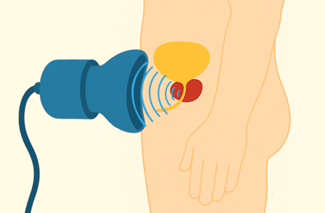
This technique is distinguished by its non-invasive nature. It involves no incision and no mechanical contact with the targeted tissue, making it a valuable option for patients for whom surgery presents significant risks, or for those seeking a gentler solution with rapid recovery.
Ultrasound thermoablation relies on precise control of acoustic parameters, including frequency, intensity, emission duration, and focal depth. These parameters are carefully adjusted depending on the type of tissue being treated and the nature of the lesion.
The technology is particularly relevant in the treatment of tumors and benign masses. Its ability to act with high selectivity, without damaging surrounding structures, makes ultrasound thermal ablation an increasingly preferred therapeutic tool.
Key Challenges in Ultrasound Thermoablation Systems
Ultrasound thermoablation is not simply a matter of increasing ultrasonic power. It involves several system-level engineering challenges.
🔹 The HIFU focal point is inherently localized, while the targeted lesions are three-dimensional volumes, often irregular in shape. The system must therefore maintain high energy density while ensuring controlled and reproducible spatial distribution.
🔹 Multi-channel HIFU systems impose strict requirements in terms of phase control, temporal synchronization, and overall stability. Even minor phase shifts, synchronization errors, or thermal drift can lead to focal displacement.
🔹 In addition, different emission modes (continuous, pulsed, or sequenced) place distinct constraints on the generation and amplification electronics. The system must maintain consistent performance across all operating modes.
🔹 Finally, HIFU thermoablation systems are designed for prolonged operation. They must ensure stable output, as well as reliable and traceable measurement of delivered energy, enabling consistent comparison of experiments and accurate analysis of results.
Product | Multi-Channel Ultrasonic Amplifiers for Ultrasound Thermoablation Research
In this research context, a thermoablation system must be controllable, reproducible, and scalable. To address these engineering challenges, SinapTec designs high-intensity ultrasonic generation systems and multi-channel power amplifiers, tailored for the development of HIFU devices and thermoablation prototypes.
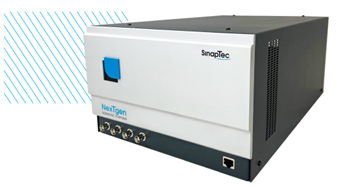
These solutions are based on stable high-intensity ultrasound generation, precise parameter control, and reliable measurement of delivered energy. They enable fine adjustment of intensity, frequency, and focusing according to experimental objectives, while remaining compatible with a wide range of transducers and test environments.
Depending on project requirements, the systems can integrate the following features:
🔹 Multi-channel driving and control
Precise adjustment of intensity, frequency, and focusing parameters, including phase and timing strategies, ensuring focal stability in multi-channel configurations.
🔹 Real-time control and monitoring
Continuous tracking and adjustment of ultrasonic parameters during experiments, facilitating repeatability and reliable comparison of results.
🔹 Power measurement and traceability
Accurate measurement of electrical power delivered to the transducer, enabling clear correlation between defined parameters and actual energy output.
🔹 Configurable and scalable architecture
Adaptation to different transducers, ultrasonic loads, and experimental setups, supporting evolving research needs.
🔹 NexTgen® environment
Configuration, monitoring, and recording of ultrasonic parameters, improving reproducibility and supporting the evolution of HIFU research systems.
🔹 MATLAB compatibility
The generator can be directly controlled via MATLAB, allowing seamless integration into your code and experimental protocols.
🔹 Custom solutions
Tailored systems can be developed to meet specific research requirements or constraints related to the devices under study.
Custom Ultrasonic Solutions: A Co-Engineering Approach
Because every scientific project comes with its own constraints, we offer custom ultrasonic solutions for thermal ablation. This tailored approach aims to design an ultrasonic module adapted to your specific application.
We work closely with you to define the key parameters, including:
- Emission frequency
- Pulse shape
- Transducer geometry
- Focal depth
- Compatibility with your imaging systems
Our engineering teams design generators capable of driving acoustic energy according to complex profiles, while ensuring an intuitive user interface.
This approach is particularly relevant for innovative treatments or applications still in the exploratory phase. Whether you aim to develop a new ultrasound ablation indication or validate an experimental protocol, we support you from the early definition stages through to implementation, with reliable and scalable tools.
We are also able to develop prototypes for clinical trials or preclinical validation. The quality of manufacturing, measurement accuracy, and robustness of our systems provide strong guarantees to secure your research and enhance the value of your results. For industrial projects, we also support the transition to industrialization, enabling large-scale integration of the developed solutions.
By choosing a custom approach to ultrasound thermal ablation, you benefit from comprehensive technical and scientific support, allowing you to fully leverage this technology. Our team is ready to work with you to advance therapeutic practices toward more targeted, safer, and better-tolerated treatments.
Applications of Ultrasound Thermoablation
Ultrasound thermoablation is used across a wide range of medical fields, with clinical results increasingly confirming its effectiveness in numerous indications. This diversity of applications is based on the ability of ultrasound waves to be precisely focused, regardless of lesion depth or tissue type.
🔹 Cancer treatment
One of the most common applications is the treatment of solid tumors. This approach is particularly relevant for localized cancers where surgery is not feasible or not desired. Liver, kidney, breast, and prostate cancers can be treated using this method.
In the specific case of prostate ablation using ultrasound, the technology enables direct targeting of the tumor without incision and, in most cases, without affecting continence or sexual function. Precise targeting helps limit side effects while ensuring effective destruction of tumor tissue.
🔹 Benign lesions
The technology is also used to treat benign lesions such as cysts or uterine fibroids. By generating localized thermal elevation, it is possible to reduce or even eliminate these structures without invasive procedures. This approach is particularly suitable for patients seeking to avoid major surgery or preserve fertility.
🔹 Cardiac conditions
Ultrasound thermal ablation is also being explored in certain cardiac applications. In cases such as arrhythmias, it enables the creation of targeted micro-lesions within myocardial tissue to correct abnormal electrical pathways. The goal is to restore normal heart rhythm without surgical tissue removal. These procedures are typically guided by imaging, ensuring a high level of safety.
Advantages of Ultrasound Thermal Ablation
🔹 One of the most immediate advantages of ultrasound thermal ablation lies in its non-invasive nature. The treatment is performed without opening the skin, without introducing instruments into the body, and without leaving scars. This significantly reduces the risks of infection, blood loss, and post-operative pain, while shortening recovery time.
🔹 Targeting precision is another key benefit. The systems we develop enable energy to be focused exclusively on the treatment area, preserving surrounding tissues. This results in better preservation of organ function, reduced side effects, and improved patient acceptance. This precision is achieved through advanced acoustic focusing technologies combined with real-time imaging tools.
🔹 The possibility of avoiding general anesthesia is also a major advantage. In many cases, ultrasound ablation can be performed under local anesthesia or light sedation. This facilitates outpatient procedures, reduces side effects associated with anesthetic drugs, and enables a faster return to normal daily activities.
🔹 Real-time treatment monitoring is another strong asset. Integrated imaging allows clinicians to observe the procedure as it happens, adjust parameters if necessary, and ensure that the targeted area is effectively treated. This responsiveness improves treatment efficiency while providing reassurance to the practitioner.
🔹 Finally, ultrasound thermoablation is a flexible solution. It can be repeated if necessary, adapted to different types of conditions, and implemented in various settings, from hospitals to specialized clinics, depending on the equipment used. This flexibility supports a more personalized and patient-centered approach to treatment.


