
The management of kidney stones, bladder stones, or other solid formations within the body presents significant challenges and often relies on invasive approaches that can be highly burdensome for the patient. Today, thanks to technological advances in ultrasound and its applications in the medical field, a non-invasive and effective method has emerged as a preferred solution: lithotripsy.
By focusing ultrasonic energy on solid structures, this technique enables the fragmentation of internal stones without damaging surrounding tissues or requiring surgical incisions.
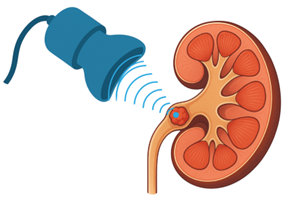
As ultrasound specialists, we at SinapTec are committed to helping you discover how, when applied to healthcare, ultrasound technologies enable innovative approaches. In this context, we present this technique in all its depth. From its fundamental principles to its practical applications, including the advantages offered by extracorporeal lithotripsy, we provide below a comprehensive overview of this innovative method.
You will also discover how we design ultrasound systems tailored to this practice, offering both ready-to-use solutions and fully customizable configurations to meet the needs of healthcare professionals.
Lithotripsy Explained: What Is Extracorporeal Shock Wave Lithotripsy (ESWL)?
Lithotripsy is a modern medical technique that enables the fragmentation of solid structures within the body, such as kidney stones, bladder stones, or certain calcifications located in soft tissues or blood vessels. It relies on high-intensity focused ultrasound, whose energy is delivered in a controlled manner inside the body to break down the targeted solid formations.
Unlike other ultrasound-based therapies such as histotripsy, which acts on soft tissues, lithotripsy is specifically intended for solid deposits. It operates without producing significant thermal effects and does not induce tissue destruction beyond the targeted formations. This selectivity is essential to ensure an approach that preserves functional anatomy.
The most commonly used method is extracorporeal shock wave lithotripsy (ESWL), meaning that the treatment is delivered from outside the body, without direct contact with the area being treated. This approach offers the advantage of simplicity of implementation while providing high effectiveness in most cases. For example, it allows the treatment of kidney stones without prolonged hospitalization and with significantly fewer side effects compared to conventional surgical procedures.
Principle of Operation of Ultrasound Lithotripsy
Lithotripsy using shock waves is based on the generation of short, high-intensity acoustic pulses. These pulses are produced outside the body and then precisely focused on the area containing the stones. The acoustic energy travels through soft tissues without causing damage and concentrates only on solid formations.
Once the waves are focused on the target, they induce the formation of microbubbles of vapor, typically near or within the stones. The rapid implosion of these bubbles releases intense mechanical energy, leading to the progressive fragmentation of the solid structures. This phenomenon can be compared to a controlled internal bursting, resulting in disintegration into particles small enough to be naturally eliminated by the body.
This technique relies on a localized action principle, which protects the surrounding tissues. The key to success lies in the precise control of acoustic parameters: frequency, intensity, duration, and pulse repetition. For this reason, particular attention is given to the configuration of ultrasonic generation systems, ensuring effective treatment while maintaining patient safety.
Treatment guidance is provided through imaging, most commonly ultrasound or X-ray systems. This visual assistance enables precise localization of the stones, adjustment of the focal point of the waves, and real-time monitoring of the fragmentation process. The combination of therapeutic ultrasound and diagnostic imaging represents a major advantage for renal lithotripsy and other clinical indications.
Applications of Ultrasound-Guided Lithotripsy
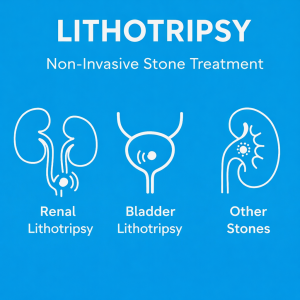
Lithotripsy is primarily used in the treatment of stones located within the urinary system. It provides an effective solution for patients, particularly in renal lithotripsy, allowing them to avoid invasive surgery while accelerating recovery.
When a stone forms in the kidney, it can cause acute pain, urinary disorders, or infections. With shock wave lithotripsy, these stones can be fragmented in situ, without mechanical extraction. Once broken down, the fragments are naturally eliminated through the urinary tract, often within days following the procedure.
The technique also applies to the bladder, known as bladder lithotripsy, which targets stones present in the bladder. This condition is common among patients with impaired bladder emptying or chronic infections. Here again, the ultrasonic method enables treatment without damaging the bladder walls and without the need for conventional surgery.
Beyond the urinary system, lithotripsy can also be used to treat certain solid formations in other parts of the body, such as gallstones, tendon calcifications (for example in the shoulder or hip), and even vascular calcifications, particularly in research settings or targeted therapies.
This versatility stems from the ability of acoustic waves to propagate through various types of tissue, combined with the capacity to precisely adjust focusing parameters according to anatomical constraints. Extracorporeal shock wave lithotripsy therefore represents a flexible therapeutic tool, suitable for a wide range of clinical and experimental applications.
Advantages of Ultrasound Lithotripsy
One of the primary advantages of shock wave lithotripsy lies in its non-invasive nature. The treatment is performed externally, without incision, without general anesthesia in most cases, and without prolonged hospitalization. This simplicity allows for outpatient care and significantly reduces postoperative risks, particularly infections and pain associated with surgical procedures.
From a physiological perspective, extracorporeal lithotripsy preserves healthy tissues. The acoustic energy passes through soft tissues without causing damage and focuses exclusively on the stones. This ensures high treatment precision while minimizing side effects for the patient. Complications are relatively rare and, when they occur, are generally mild and temporary compared to other treatment methods.
Rapid recovery is another key advantage. After a session of renal or bladder lithotripsy, most patients can resume normal activities within 24 to 48 hours. The procedure does not interfere with vital functions and leaves no lasting sequelae, representing a significant benefit in terms of quality of life.
Finally, lithotripsy is a repeatable technique. In some cases, multiple sessions may be required to treat large or resistant stones. The non-invasive nature of the procedure allows for repetition without exposing the patient to significant cumulative risks. This flexibility is particularly valuable in complex or chronic cases, where a less aggressive approach is preferred over radical treatment.
Ultrasonic Power Amplifier for Lithotripsy Research Systems
To enable effective and safe lithotripsy, we develop ultrasonic systems fully tailored to the specific requirements of this application. Our solutions are based on a modular architecture, allowing seamless integration into various clinical environments, whether for renal lithotripsy, bladder lithotripsy, or research protocols.
The core of our approach lies in the ability to generate sufficient ultrasonic intensity while ensuring precise control of acoustic parameters. Our amplifiers are designed to deliver accurate, repeatable, and adjustable pulses, enabling optimized stone fragmentation depending on their composition, size, and location.
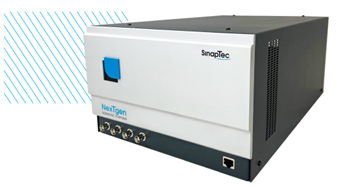
HIFU Ultrasonic Power Amplifier for MedTech
We also offer multi-channel control of ultrasonic generation, enabling improved focusing and broader coverage of the treatment area. This approach enhances overall efficiency, particularly for complex or poorly localized stones. Compatibility with existing imaging systems is also ensured, providing smooth and accurate guidance throughout the procedure.
Our systems are developed through close collaboration with medical teams, researchers, and engineers specialized in medical acoustics. Every aspect of the design is carefully considered to meet real-world requirements, including reliability, ease of use, and therapeutic performance.
Custom Ultrasonic Solutions
Because requirements vary from one environment to another, we also offer custom ultrasonic solutions for lithotripsy. This tailored approach enables us to develop equipment aligned with your specific objectives, whether for standard clinical applications or advanced research protocols.
We design flexible solutions that can adapt to different types of stones, various anatomical configurations, and specific technical constraints. This adaptability is built on continuous collaboration with our partners, ensuring we deliver tools that meet your expectations without compromising on quality or safety.
Our experts are available to analyze your needs, model a coherent technical solution, and support you throughout its implementation. Whether you aim to enhance your existing technical platform or explore new therapeutic applications in lithotripsy, we are committed to designing a system that precisely fits your challenges.
At SinapTec, we collaborate with research laboratories and medical device manufacturers to develop ultrasonic solutions tailored to their projects.


