
At the intersection of applied physics and precision medicine, histotripsy is emerging as a promising therapeutic approach. Based on the use of high-intensity ultrasound, this non-invasive technique aims to selectively fragment pathological tissues—particularly tumors or benign lesions—without damaging surrounding structures.
Its mechanism relies on advanced acoustic principles capable of generating powerful mechanical effects within the human body, all without the need for any surgical incision.
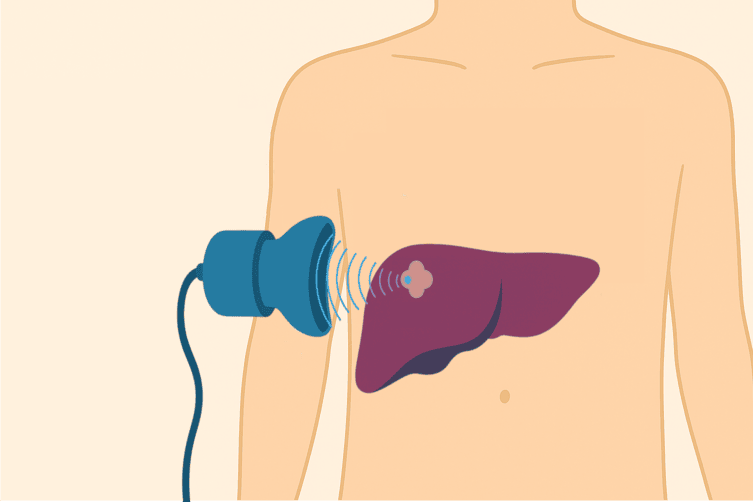
We are currently at a stage where advances in ultrasound-based therapies are opening up new possibilities for the treatment of many pathologies. At SinapTec, as a specialist in ultrasound and in mastering the technologies that rely on it, we aim to provide you with an in-depth understanding of histotripsy—its operating principles, its benefits, and its concrete applications—as well as the solutions we develop to support healthcare professionals in this transition toward more patient-friendly and minimally invasive techniques.
Histotripsy definition: what is this method?
Histotripsy is a therapeutic method based on the use of focused acoustic waves to mechanically break down diseased tissues inside the body. Unlike thermal procedures such as radiofrequency, histotripsy works without heating the tissues, instead relying on the mechanical effect generated by cavitation.
This phenomenon occurs when very intense, yet extremely short ultrasonic pulses generate microscopic gas bubbles within the targeted tissue. These bubbles grow under the influence of the acoustic wave and then collapse, leading to the localized destruction of cells in the affected area. The entire process takes place without incisions, without exposure to ionizing radiation, and without requiring direct contact with the targeted tissue.
This characteristic positions histotripsy as a highly promising therapeutic alternative, particularly for patients who cannot undergo conventional surgery, or for those for whom radiotherapy poses risks or contraindications. Its ability to deliver highly targeted and precise treatment also paves the way for new clinical protocols in the management of complex or sensitive pathologies.
Principle of Operation of Ultrasound Histotripsy
The operation of histotripsy relies above all on the control of the characteristics of the emitted acoustic signal. By adjusting the duration, frequency, and intensity of the pulses delivered, it is possible to obtain distinct effects on the targeted tissues. We mainly distinguish two mechanisms, which we adapt according to the nature of the intervention and the desired outcomes.
The first approach, which we refer to as cavitation histotripsy, uses very short pulses, but with extremely high intensity. These conditions induce violent acoustic cavitation: the bubbles formed within the tissue collapse with force, creating microjets and shock waves that disintegrate cells. This process does not rely on a rise in temperature, making it particularly suitable for tissues that are sensitive to heat or located near critical structures.
The second modality, which we designate as boiling histotripsy, relies on slightly longer pulses that induce a moderate increase in temperature. This heating leads to the formation of gas bubbles within the tissues through a boiling effect. These bubbles, subjected to focused ultrasound, undergo rapid expansion followed by collapse, thereby combining an enhanced mechanical effect with a moderate thermal action. This approach makes it possible to treat denser or larger masses while maintaining a high level of precision.
These principles are implemented in rigorously controlled clinical environments, with real-time monitoring ensured by medical imaging systems. The objective is to guarantee precise control of the therapeutic effect, while dynamically adjusting the parameters to the anatomical or pathophysiological variations of each patient.
Medical Applications of Ultrasound-Guided Histotripsy
As clinical research progresses and practical experience continues to grow, the applications of histotripsy in the medical field are gradually expanding. At present, ongoing studies mainly focus on the management of solid tumors, the ablation of benign lesions, the treatment of necrotic tissues, and the exploration of new therapeutic approaches in the cardiovascular field.
Research Directions in Localized Cancer Applications
In the field of localized cancers, histotripsy is being widely studied as a potential technological approach. This method enables the selective fragmentation of targeted tumor tissue without incision and without ionizing radiation. Current research covers multiple anatomical sites, including the liver, kidney, and breast, as well as tumor management approaches based on focused ultrasound.
The interest in this technology lies in its potential to act precisely on tumor tissue while minimizing the impact on surrounding healthy structures, thereby offering new perspectives for improving patient comfort and preserving essential physiological functions.
Management of Benign Lesions
Beyond tumor-related applications, histotripsy also shows potential in the management of benign lesions, such as uterine fibroids, cysts, or kidney stones. In these contexts, the high precision of ultrasound enables effective fragmentation of the targeted tissue while preserving surrounding structures as much as possible.
The procedure is typically performed in a controlled environment and combined with imaging guidance (such as ultrasound imaging) to ensure more accurate targeting and monitoring.
Management of Necrotic Tissues
Histotripsy may also serve as a potential approach for the management of necrotic tissues or pathological collagen deposits. Ongoing studies suggest that the selective removal of these tissues may help reduce their impact on organ function and support recovery following infection or inflammation.
The core objective of this type of application is to enable non-invasive intervention while maintaining the overall structural integrity of the tissue.
Exploratory Directions in Cardiovascular Applications
In the cardiovascular field, histotripsy remains at an exploratory stage but is attracting increasing attention. Current research is evaluating its potential role in certain arrhythmias, such as atrial fibrillation, for example by targeting specific tissue regions involved in the disruption of cardiac electrical activity.
Although these applications have not yet entered routine clinical practice, their development opens up new directions for future therapeutic strategies.
Advantages of Ultrasound in Non-Invasive Histotripsy
One of the main advantages of histotripsy lies in its non-invasive nature. As it does not require any incision, it significantly reduces the risks of procedural complications, particularly infections, bleeding, or post-treatment pain. For patients, this translates into a substantial improvement in comfort and recovery time.
The high-intensity ultrasound used in histotripsy enables extremely precise targeting. This capability is especially valuable when addressing lesions located near critical structures such as nerves, blood vessels, or vital organs. The preservation of healthy tissues makes this technology a solution that supports the maintenance of the patient’s anatomical integrity.
Another key aspect is the real-time control provided by integrated imaging systems. Using ultrasound imaging or MRI, practitioners can monitor the progression of the procedure in real time, adjust acoustic parameters if necessary, and assess the effectiveness of the treatment as it is being performed. This dynamic monitoring provides an additional level of safety and reliability.
Unlike other methods that rely on thermal destruction, histotripsy can be applied without causing excessive temperature increases. This helps avoid internal burns or collateral damage that may result from uneven heat diffusion in deep tissues. This technical characteristic is one of the reasons why histotripsy is being considered for delicate or repeatable treatment approaches.
Our HIFU amplifier for your histotripsy systems
In our technological approach, we develop high-intensity ultrasound systems specifically designed to meet the requirements of histotripsy. Our generators are equipped with advanced features that enable precise control of pulse modulation, frequency, and intensity, allowing the treatment to be adapted to each clinical configuration.
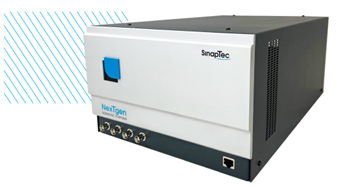
We integrate multi-channel architectures that enable highly controlled focusing of acoustic energy. By multiplying emission points and synchronizing them with precision, we achieve targeted power delivery while minimizing exposure to surrounding tissues. These systems are designed to ensure optimal performance while maintaining a high level of patient safety.
Our solutions are developed to meet the needs of both preclinical research and routine clinical protocols. They allow for customized parameter settings depending on the targeted organ or tissue type, with real-time monitoring capabilities. The tracking of acoustic data, measurement of delivered power, and control of focalization are all key features integrated into our equipment.
We also continuously work on improving these systems, in collaboration with clinical centers and specialized laboratories, in order to enhance performance and functionalities in line with ongoing scientific advancements.
SinapTec: Tailored Ultrasound Solutions
Because every project is unique, we also develop customized solutions for histotripsy applications. We support you in defining your specific requirements, whether they involve research needs, complex clinical protocols, or advanced experimental configurations.
We provide our expertise to design fully customized systems capable of integrating the parameters specific to your field of application. Our objective is to deliver reliable, high-performance technology that is perfectly adapted to your environment, while ensuring ease of use and continuous technical support. Whether you operate in a laboratory or a clinical setting, we offer tailored solutions designed to match your ambitions in the field of histotripsy.
Do you have a specific project, a technical question, or need a quotation? Our experts are ready to support you.


