
Do you have a question about one of our modules below? Need a quote or further information?
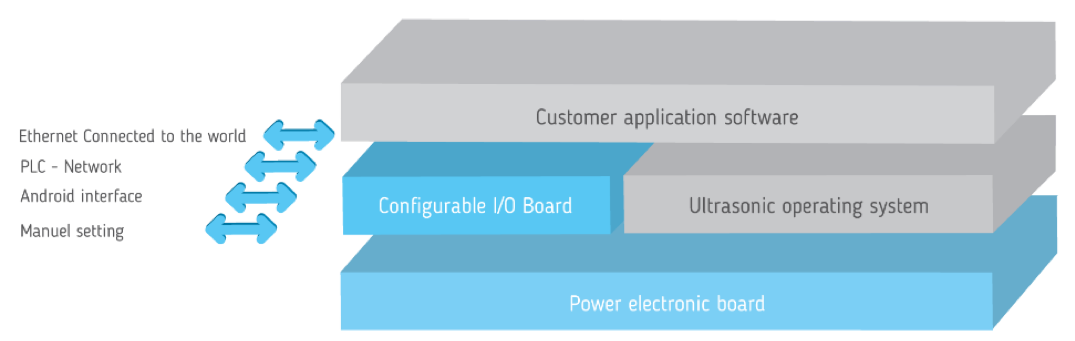
Drawing on extensive experience in implementing ultrasound across a wide range of applications, supported by several years of research into the integration of the most advanced electronic components, comprehensive software development, and multiphysics simulation tools for ultrasonic transducer design, our NexTgen® development platform is the ideal tool for designing and producing the ultrasonic module best suited to your technological constraints and market requirements.
Standard OEM Ultrasonic Generators
Three families of generators, a unique platform enabling control adjustment and optimization, power monitoring, and a portfolio of patents protecting our technology—together these ensure we can meet all requirements. Since the beginning of our commercial rollout, no customer application has ever challenged the limits of our technology.
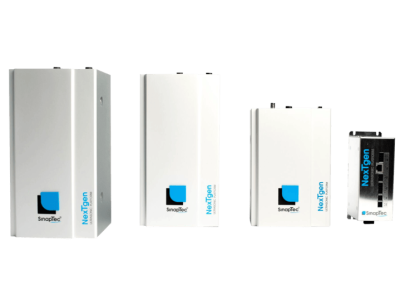
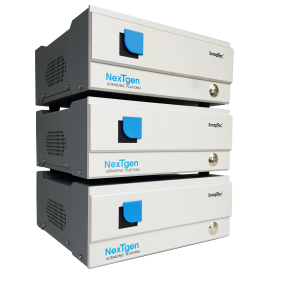
Our standard modules from the Incase and Inside ranges have been successfully implemented in all types of industrial applications. With power levels ranging from 30 W to 5 kW, these ultrasonic generators are available for transducers operating between 12 kHz and 100 kHz.
Generators INSIDE
Generators INCASE
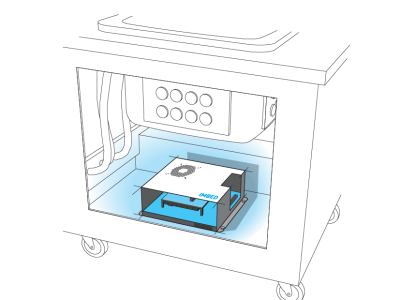
Generators IMBED
Our generator range enables the development of any new application thanks to the flexibility of our technology:
-
For proofs of concept, combined with our standard transducers or a custom one
-
For implementation in constrained environments (pressure, temperature, radiation, etc.)
-
For qualifying early-stage developments
-
For deploying your final solution, whether integrated into equipment, set up on a bench, or embedded in a device
The strength of our concept—and our commitment—is to provide you with equipment that closely matches your specifications, ready to be implemented within just a few days or weeks.
Custom OEM Generators
We offer a range of compact and integrated generators for all embedded system applications.
If our standard OEM module offering doesn’t meet your specifications—due to environmental constraints, space limitations, or cost considerations for medium- or large-scale production—we adapt our technology to your usage requirements: electronic board design, transducer development, implementation, and production.
Our engineering and development team can take full responsibility for your project, so you can benefit from the best technology available.
From the feasibility phase and proof of concept through to full-scale production, we implement a complete development process that includes electronic board design, embedded software integration, and, if necessary, the design of a transducer tailored to your application.
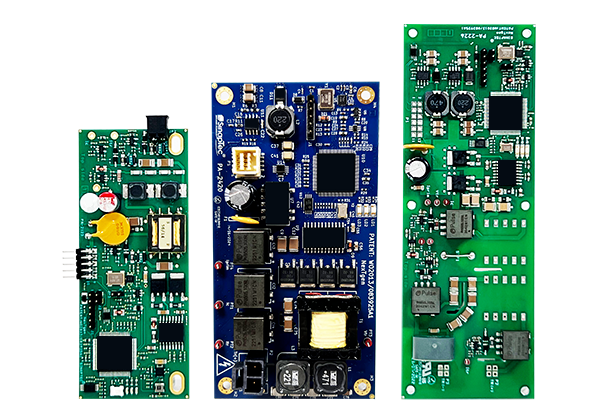
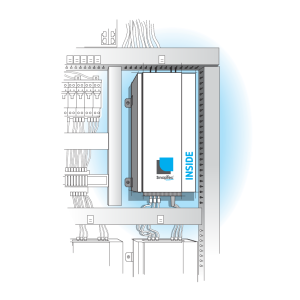
INSIDE
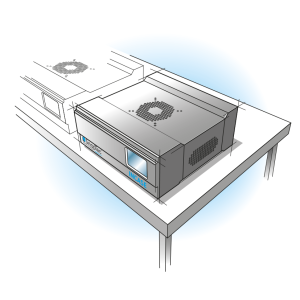
INCASE
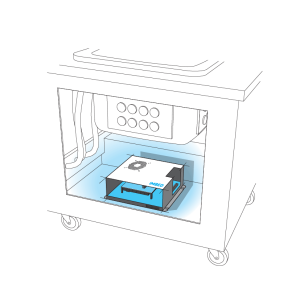
IMBED
Custom Transducers
Beyond our industrial product range, we have developed numerous transducers with varying frequencies, power levels, and applications. Ultrasound physics is part of SinapTec’s DNA, and we design our transducers and tools using the latest multiphysics simulation technologies.
Choosing the right ultrasonic generator for your application
When selecting an ultrasonic generator, nominal power is only the starting point. What truly makes the difference in real operating conditions is the system’s ability to remain stable when your process changes, even slightly. A variation in contact pressure, temperature, viscosity, humidity, or simply material inconsistency can modify the load seen by the ultrasonic system. A properly sized ultrasonic generator must therefore maintain stable operation, without gradual drift or constant readjustment. At SinapTec, we help you think in terms of process-related criteria rather than simple electrical specifications. The goal is to choose a control strategy that maintains effective vibration over time, with enough operating margin to absorb the normal variations of an industrial workshop. This approach is particularly useful when the ultrasonic transducer operates under intensive cycles, high production rates, or in environments where maintenance access is limited.
🔹The ultrasonic generator and ultrasonic transducer: an inseparable system
In an ultrasonic assembly, the ultrasonic transducer is not a default interchangeable accessory. Together with the ultrasonic generator, it forms a functional pair that must be considered as a complete system. The energy conversion chain — from electrical energy to mechanical vibration — depends on the electromechanical behavior of the ultrasonic transducer, its mounting, the applied load, and the way the generator drives the entire system.
This is why we pay particular attention to the coupling between the ultrasonic generator and the ultrasonic transducer: operating frequency, adjustment range, tracking strategy, and the ability to remain close to the optimal operating point as conditions change. In some applications, this coupling directly affects the repeatability of ultrasonic welding, the quality of ultrasonic cutting, the efficiency of cavitation in liquids, or the precision of nebulization. From an OEM perspective, this coherence helps you avoid two common pitfalls: unnecessarily oversizing the generator “just to be safe”, or, on the contrary, choosing a system that is too limited — one that works in the laboratory but becomes unstable in series production.
🔹Resonance, load tracking and stability: what you should expect in production
The ultrasonic transducer and its associated tooling — booster, sonotrode or liquid treatment components — operate around a resonance range. In real conditions, this range can shift slightly due to temperature, mechanical wear, assembly conditions or load variations. An ultrasonic generator designed for industrial use must therefore be able to manage these micro-variations without losing energy transfer efficiency. In demanding processes, stability can be assessed through concrete signs: less drift during a production batch, fewer variations between two series, fewer rework operations and a more comfortable adjustment window. This is exactly what you are looking for when integrating an ultrasonic generator into a special-purpose machine: a process that does not depend on a “good morning setting”, but on robust control throughout the day, across different operators and despite possible material variations.
🔹Measuring useful power: avoiding confusion between “displayed power” and “transmitted power”
In many projects, the challenge comes down to a simple question: what share of the power is actually dissipated in the process? The power an ultrasonic generator can deliver is not necessarily the power effectively transmitted to the ultrasonic transducer and tooling — and even less the power actually absorbed by the material or liquid.
To secure trials, compare solutions, or prepare for scale-up, it is useful to think in terms of the energy actually delivered to the process — per cycle, per volume, or per treatment time — and then link this energy to your performance criteria: weld quality, cutting precision, droplet size, extraction yield, emulsion stability, and more. This approach helps avoid unpleasant surprises when moving from benchtop equipment to a pilot installation, and then to production.
With our technologies, we can guide you through this process-oriented interpretation, so that the sizing of your ultrasonic generator and ultrasonic transducer is coherent, realistic and reproducible.
OEM integration: what really matters for machine manufacturers
An ultrasonic generator designed for OEM integration must meet requirements that go far beyond pure performance. In production, you need a system that is easy to integrate into an electrical cabinet, compatible with your automation architecture, accessible for maintenance, and stable under sometimes demanding operating conditions. Footprint, ventilation, thermal management, control interfaces, wiring and operating ergonomics are all key success factors. This is precisely the mindset behind the way we design our solutions: enabling fast, clean and durable integration, without having to redesign the machine around the module. This approach helps you accelerate development, reduce industrialization iterations and secure the availability of your equipment.
Traceability, diagnostics and operation: turning the ultrasonic generator into a process tool
In modern industrial environments, the ultrasonic generator is no longer just a power converter. It becomes a tool for controlling and understanding the process. The ability to monitor parameters, detect drift and analyze historical data is particularly useful in applications where quality must remain stable, production rates are high, or the line must remain available with a minimum of unplanned downtime. Good diagnostics make it possible to quickly identify the source of a deviation:
- material variation,
- tooling issue,
- mechanical assembly problem,
- setting drift,
- change in load.
This saves time both during commissioning and in daily operation, while also making team training easier by making ultrasonic behavior more readable.
The ultrasonic transducer: selection criteria beyond frequency
The ultrasonic transducer is often discussed in terms of frequency, but other criteria can be decisive depending on your application. Mechanical robustness, resistance to intensive operation, compatibility with the environment — humidity, temperature, cleaning constraints, specific atmospheres — ease of mounting and stability under load all have a direct impact on process repeatability.
For some applications, the geometry of the final tool and the way it is excited can be just as important as the transducer itself. This is where a co-design approach brings its full value: working on the complete transducer–amplification–tool assembly to obtain the right amplitude in the right place, with a controlled level of mechanical stress. We can support you in this sizing process in order to select an ultrasonic transducer that is consistent with your ultrasonic generator, your process and your integration constraints.
Securing a project: from proof of concept to series production
When developing a new application, the best strategy is often to quickly secure a proof of concept, then structure the transition towards an industrializable system. Along this path, the choice of ultrasonic generator and ultrasonic transducer must anticipate what comes next: target production rate, operating mode — continuous, cyclic or batch — environmental constraints, traceability requirements, and costs in medium- or large-scale production.
This is the stage where costly compromises can be avoided. A system that works very well during testing can become fragile if industrialization requires a different mechanical architecture, another cooling method, another automation interface or another transducer. By structuring the sizing process from the very beginning, you gain development speed and greater confidence when moving into production.
Applications: one ultrasonic generator, very different requirements
Whether your application involves ultrasonic cutting, welding, industrial ultrasonic cleaning, cavitation in liquids, ultrasound-assisted extraction, emulsification or nebulization, the success criteria are not the same. Some processes require a very fast response to load variations, others require thermal stability, while others need the ability to operate for long periods without drift. In all cases, it is the coherence between the ultrasonic generator and the ultrasonic transducer that determines performance. Our approach consists in connecting the technology to your real application: what constraints, what performance indicators, what operating conditions, and what acceptable limits. This usage-oriented perspective makes it possible to propose a system that is reliable, useful and exploitable, rather than a high-performance assembly that is difficult to industrialize.
Turn your ultrasonic generator into an industrial advantage
If you are looking to integrate an ultrasonic generator into a special-purpose machine, make an existing process more reliable, or develop a new application with a specific ultrasonic transducer, the key is to build a complete system: control, mechanics, integration, operation, maintenance and traceability.
We can support you with this global approach, so that your solution is not only high-performing, but also stable, safe and durable — capable of operating routinely without making operation more complex, thanks to the technologies and design methods we develop and implement for industry.


